How a Robot Laser Welding Machine Is Changing Precision Production

Manufacturing environments are constantly searching for ways to improve consistency without slowing production. Welding is one of the areas where this balance can become particularly challenging because every joint needs to meet the required standard while production teams may have to repeat the same operation hundreds or thousands of times. Manual welding can provide excellent results in skilled hands, but repetitive work can also introduce variations caused by fatigue, positioning, movement, and changing working conditions.
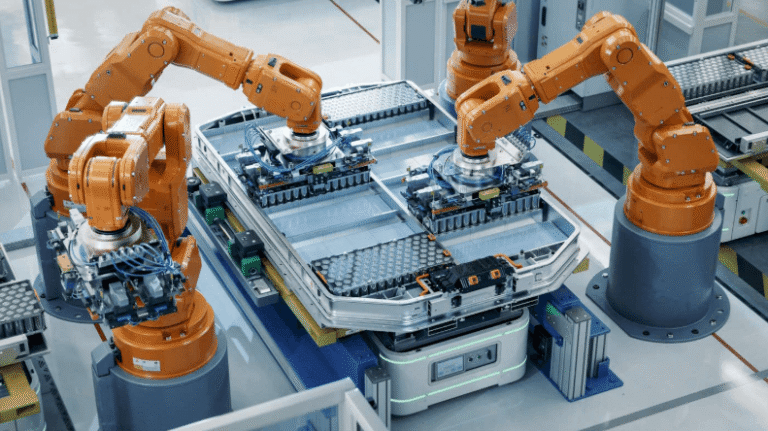
A robot laser welding machine combines automated robotic movement with the concentrated energy of laser welding. Instead of requiring an operator to manually guide every weld, the robotic system can follow programmed paths while the laser delivers energy to a controlled area of the workpiece. This combination can be useful for manufacturers that need repeatable welds, precise positioning, controlled heat input, and consistent production cycles.
The technology is particularly interesting because it changes the way welding can be integrated into a wider manufacturing process. The robot, laser source, fixture, sensors, software, extraction system, and inspection equipment can operate as a coordinated production cell. When the system is properly designed, welding becomes a repeatable stage within the manufacturing workflow rather than an isolated operation that depends entirely on manual execution.
What Is a Robot Laser Welding Machine?
A robotic laser welding system generally consists of a robotic arm or automated motion platform combined with a laser welding head.
The robot controls the movement of the welding head, while the laser supplies concentrated energy to the selected joint. A control system coordinates movement and process parameters according to the programmed welding sequence.
The exact configuration can vary depending on the material, component geometry, production volume, and required weld characteristics.
See also: How Technology Shapes Career Paths
Why Laser Welding Works Well With Automation
Laser welding can create a highly concentrated heat source.
This allows manufacturers to direct energy toward a relatively small area of the component, which can be useful when controlling the size of the heat-affected region is important.
When that controlled energy delivery is combined with robotic movement, the same welding path can be repeated consistently across multiple components.
Repeatability Is One of the Biggest Advantages
Manufacturing consistency becomes increasingly important as production volume increases.
A robotic system can follow the same programmed trajectory repeatedly, reducing variations in movement that may occur during highly repetitive manual operations.
This does not mean that the finished weld will automatically be perfect. Component preparation, fixture accuracy, laser settings, material condition, and programming still influence the result.
Understanding the Importance of Heat Input
Welding involves introducing heat into a component, but excessive heat can create unwanted effects.
Depending on the material and joint design, thermal input can contribute to distortion or affect nearby features.
Laser welding’s concentrated energy can help manufacturers control where heat is delivered.
This can be valuable when working with components that require accurate dimensions after welding.
Production Speed and Cycle Time
Automation can help manufacturers reduce repetitive movement between welding operations.
Once the welding sequence has been properly programmed and optimized, the robot can perform the same series of movements without the pauses and repositioning associated with some manual workflows.
However, speed should always be balanced with weld quality. Increasing the travel speed without appropriately adjusting laser power and other parameters can negatively affect the joint.
The Importance of Accurate Fixtures
A robot can only follow the programmed path relative to the position of the component.
If a workpiece moves or is positioned differently from the expected location, the welding head may no longer reach the joint correctly.
Fixtures therefore play an important role in robotic welding.
A reliable fixture should hold components securely while allowing the welding head to access the required areas.
Programming Determines the Welding Path
Robotic welding requires more than simply turning on the laser.
The robot needs a defined movement path, appropriate speed, positioning instructions, and coordinated laser parameters.
Programming should also account for the geometry of the workpiece and the order in which different joints are completed.
Well-developed programs can contribute significantly to repeatability.
Sensors Can Make Systems More Adaptable
Some robotic welding systems incorporate sensors to provide additional information during production.
Depending on the application, sensing technology can assist with positioning, seam tracking, process monitoring, or quality control.
This can help address variations that a completely fixed program might not handle effectively.
The appropriate sensor technology depends on the production environment and the type of variation that needs to be detected.
Material Characteristics Matter
Laser welding does not behave identically with every material.
Reflectivity, thermal conductivity, thickness, surface condition, and alloy composition can influence how the material responds to the laser.
For this reason, welding parameters should be developed for the specific material and joint configuration.
A successful setting for one component may not produce the same result on another.
Joint Preparation Cannot Be Ignored
Even highly advanced equipment cannot compensate for poor joint preparation.
The fit between components, joint gap, surface cleanliness, alignment, and accessibility can all influence weld quality.
Manufacturers considering robotic laser welding should therefore evaluate the complete component design.
Sometimes a small change to the part or fixture can make the automated welding process considerably more reliable.
Applications in Automotive Production
Automotive manufacturing is heavily dependent on repeatable production processes.
Large quantities of similar components need to be produced with consistent quality and controlled cycle times.
Robotic laser welding can be suitable for selected automotive applications where precise and repeatable joining is required.
Its usefulness depends on the specific component, materials, joint geometry, and production requirements.
Electronics and Small Components
Manufacturers working with smaller components can face strict requirements around positioning and heat management.
The concentrated nature of laser energy can make the technology attractive for suitable applications where the affected area needs to remain controlled.
Robotic positioning can further improve repeatability when the same small joints are produced repeatedly.
Medical Manufacturing
Medical manufacturing often requires high levels of consistency and controlled processes.
Where laser welding is appropriate for the selected materials and components, robotic automation can provide repeatable movement and process control.
However, medical applications may also require additional validation, documentation, inspection, and traceability beyond ordinary production welding.
Aerospace Production
Aerospace manufacturing involves demanding quality requirements and specialized materials.
Automated laser welding can be considered for applications where repeatable joining and precise heat delivery are valuable.
Before implementation, manufacturers must ensure that the process meets the applicable quality and qualification requirements for the specific component.
Inspection Remains Essential
Automation does not remove the need for quality control.
A robotic system can repeat the same process very accurately, but an incorrect program or unsuitable parameter can also repeat the same mistake across many components.
Inspection procedures should therefore verify that the automated process is producing acceptable results.
Depending on the application, this may involve visual inspection, dimensional checks, destructive testing, or non-destructive examination.
Maintenance of the Laser System
A robotic welding cell contains several components that require maintenance.
Laser optics, cooling systems, robotic joints, sensors, fixtures, extraction equipment, and control hardware can all influence production performance.
Keeping these systems in good condition helps reduce unexpected downtime.
Preventive maintenance can also identify problems before they begin affecting weld quality.
Safety in Robotic Laser Welding
Laser welding combines optical energy with automated mechanical movement and heat.
A properly designed cell should therefore include suitable guarding, interlocks, warning systems, extraction, electrical protection, and operating procedures.
Personnel working around the equipment should receive appropriate training for operation, programming, maintenance, and emergency procedures.
Automation should improve the production process without compromising workplace safety.
Comparing Robotic and Manual Welding
Manual welding remains useful for prototypes, repairs, low-volume work, complex custom components, and situations where frequent human adjustment is necessary.
Robotic laser welding becomes more attractive when manufacturers have repeatable components and sufficiently high production volumes to justify automation.
The choice should therefore be based on the production problem rather than assuming that automation is automatically the better option.
Evaluating the Investment
A robotic laser system can require significant upfront investment.
Manufacturers should examine production volume, current labour requirements, cycle time, quality expectations, material costs, maintenance, training, and expected equipment utilization.
The financial case is generally stronger when the system can operate consistently across a substantial production workload.
What Should Manufacturers Consider?
Before selecting a robotic laser welding system, manufacturers can evaluate:
- Material type and thickness
- Required weld configuration
- Component dimensions
- Joint accessibility
- Production volume
- Required cycle time
- Robot reach and positioning
- Laser power requirements
- Fixture accuracy
- Sensor requirements
- Inspection procedures
- Maintenance requirements
- Safety systems
- Operator training
- Future expansion needs
Considering these factors together can help prevent the purchase of equipment that is technically impressive but poorly matched to the actual application.
Designing the Complete Production Cell
The robot and laser should not be considered separately from the rest of the manufacturing process.
Material loading, fixtures, positioning, extraction, inspection, safety systems, programming, and unloading all influence the productivity of the cell.
A highly capable laser can still become a bottleneck if components take too long to load or the fixture requires frequent manual adjustment.
Good automation therefore looks at the complete production sequence.
Final Thoughts
A robot laser welding machine can provide manufacturers with a powerful combination of concentrated laser energy and programmable robotic movement. For suitable production environments, this can support repeatable weld paths, controlled heat input, consistent positioning, and efficient processing of repetitive components. These characteristics can be particularly valuable when manufacturers need to maintain predictable results across large production runs.
The equipment itself, however, is only one part of the solution. Fixtures, programming, material preparation, sensors, laser parameters, inspection, maintenance, and safety systems all contribute to the final result. Treating the robot and laser as a standalone purchase can overlook important factors that determine whether the production cell actually performs as expected.
The most effective approach is to design automation around the specific manufacturing requirement. When the component geometry, material, production volume, quality expectations, and workflow are properly understood, robotic laser welding can become a practical part of a modern production line. Instead of simply automating a manual task, it can create a more controlled and repeatable welding process built around the demands of precision manufacturing.