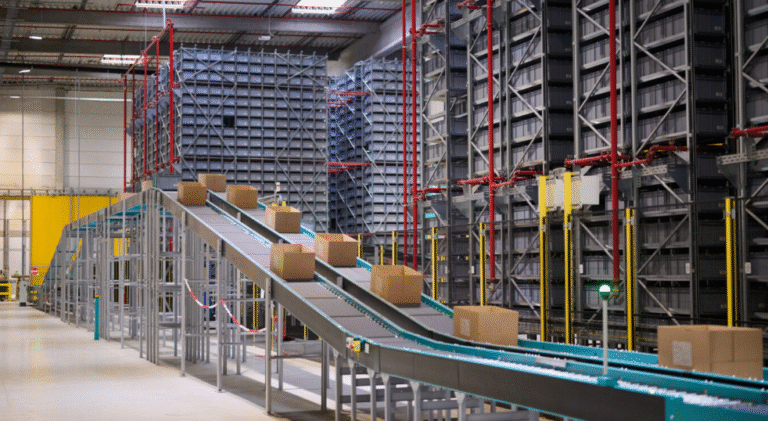
How a Well-Designed Packing Line Machine Keeps Products Moving From Filling to Final Dispatch

Packaging can look like a straightforward final step in manufacturing, but the reality is considerably more complex. Before a finished product reaches a warehouse or customer, it may need to be filled, weighed, sealed, labeled, inspected, grouped, and prepared for transportation. When these stages depend heavily on disconnected manual tasks, even a small delay can create a backlog that affects the rest of the production schedule. A properly planned packing line machine can connect several of these activities into a more coordinated process, helping products move steadily from one stage to the next. The value lies not simply in reducing manual work, but in creating a predictable flow that supports consistent output and product quality.
Every packaging operation has its own challenges. Liquids, powders, granules, food products, cosmetics, pharmaceuticals, and manufactured components can require completely different handling methods. Packaging formats also vary widely, from bottles and jars to cartons, pouches, trays, and other containers. A system that works efficiently for one product may be unsuitable for another because of differences in weight, shape, viscosity, fragility, or packaging material. For this reason, selecting packaging equipment should begin with understanding the product and production process rather than starting with a machine’s advertised speed or size.
A successful packaging line also depends on what happens around the main equipment. Conveyors need to deliver products consistently, packaging materials must be available at the correct rate, operators need clear procedures, and downstream processes such as labeling, inspection, case packing, or palletizing must be able to keep pace. Maintenance and cleaning can affect productivity just as much as machine speed. When all these factors are considered together, packaging automation can become a practical part of a scalable manufacturing operation rather than an isolated investment.
Product Characteristics Shape the Entire Packaging Process
The physical nature of a product influences how it should be handled from the beginning of the packaging cycle. Free-flowing powders and granules may require controlled dosing systems, while liquids can require precise filling methods that account for viscosity and foaming. Fragile products may need gentle transfer, and irregularly shaped items may require specialized feeding or positioning equipment. Temperature can also matter when products need to be filled or sealed under particular conditions.
Consistency is another important factor. If individual products vary significantly in size, weight, or shape, the feeding and filling stages may require additional controls to maintain reliable results. Product characteristics can also determine the type of conveyor, hopper, feeder, nozzle, or sealing mechanism needed. Understanding these requirements before equipment selection helps prevent compatibility problems that can become expensive to correct after installation.
Packaging Format Determines More Than the Final Appearance
The container or package is not simply a final shell around the product. Its dimensions, material, opening, rigidity, and shape can influence nearly every stage of the packaging process. A rigid bottle may travel differently through a conveyor system than a flexible pouch, while a carton may require folding or forming before it can be filled and sealed.
Operations that use multiple package sizes also need to consider adjustment and changeover requirements. A line designed around only one format may be highly efficient for continuous production but less practical for facilities with frequent product variations. Equipment with appropriate adjustment features can help businesses switch between formats without excessive downtime. The correct solution depends on the production schedule and the degree of flexibility required.
Building a Reliable Packaging Flow Requires Several Pieces
A packaging line works best when each stage supports the next rather than operating as a separate process. The exact equipment combination varies by industry, but a typical workflow may include product feeding, filling or dosing, container handling, sealing, labeling, inspection, and secondary packaging.
Useful elements to consider include:
- Product feeding: Provides a steady supply of products or ingredients to the packaging process.
- Filling and dosing: Controls the amount of product entering each package.
- Container handling: Positions bottles, pouches, cartons, or other formats consistently.
- Sealing: Closes packages according to the required packaging method.
- Labeling and coding: Adds product information, batch details, dates, or identification marks.
- Inspection: Helps identify selected defects or inconsistencies before products move further.
- Conveying: Connects individual stages and maintains product flow.
- Secondary packaging: Groups individual units into cartons, cases, or other shipping formats.
The important point is that these stages need to work at compatible rates. Increasing the speed of one machine does not necessarily improve total production if another stage becomes the bottleneck. A balanced line can often deliver more useful productivity than a collection of individually fast machines that cannot operate efficiently together.
Throughput Should Be Measured in Real Operating Conditions
Machine specifications often include maximum speeds, but actual production output can be lower because of changeovers, product variation, material shortages, cleaning, operator intervention, minor stoppages, and maintenance. Looking only at the highest possible speed can therefore create unrealistic expectations.
A better approach is to estimate expected output under normal operating conditions. Production teams should consider how often the line changes products, how long setup takes, whether packaging materials need frequent replacement, and how consistently products arrive at the packaging stage. This gives a more practical understanding of capacity and can make equipment comparisons more meaningful.
Changeover Time Can Quietly Reduce Production Capacity
Facilities that package several products may lose a substantial amount of production time during changeovers. Switching package sizes, cleaning product-contact components, replacing labels, adjusting filling systems, or changing machine settings can all reduce available operating time.
For this reason, changeover design should be considered during the purchasing process. Accessible adjustment points, clearly defined settings, suitable tooling, and straightforward cleaning procedures can make transitions easier. In some operations, reducing changeover time may provide a greater productivity improvement than increasing maximum machine speed.
Accuracy Protects Both Quality and Material Costs
Packaging accuracy has a direct relationship with product consistency and manufacturing costs. Overfilling can create unnecessary product giveaway, while underfilling can cause compliance and customer satisfaction issues depending on the product and applicable requirements. Consistent sealing and labeling are equally important because packaging defects can result in rejected units or additional inspection work.
Automated weighing, dosing, sensing, and inspection technologies can support greater consistency depending on the application. However, automated controls still need appropriate calibration, maintenance, and monitoring. A system is only as reliable as the way it is configured and maintained. Regular checks can help identify drift or developing problems before they affect a large production run.
Hygiene Requirements Should Influence Equipment Design
Food, beverage, pharmaceutical, cosmetic, and other sensitive products may require strict cleaning and sanitation procedures. Equipment surfaces, joints, product-contact components, conveyors, filling mechanisms, and other areas need to be considered from a hygiene perspective.
Cleaning time can also influence production efficiency. If components are difficult to remove or access, routine sanitation may require longer downtime. Equipment designed with practical access can make inspection and cleaning easier, although the exact requirements depend on the product and relevant industry standards. Hygiene should therefore be considered during the initial equipment-selection process rather than treated as a later modification.
The Production Floor Needs Space for More Than the Machine
Packaging equipment has a physical footprint, but the space required for successful operation is usually larger than the machine itself. Operators need room to work, materials need to be staged, maintenance personnel need access to service points, and products need sufficient clearance as they move between stages.
The surrounding layout can also affect safety and productivity. Poorly positioned conveyors or storage areas may create unnecessary crossings and congestion. A line that fits physically into a production room may still be inefficient if workers cannot move around it comfortably. Layout planning should therefore consider the complete operating area, including material supply, finished-product removal, cleaning, maintenance, and emergency access.
Maintenance Determines How Consistently the Line Performs
Packaging equipment contains numerous moving, electrical, pneumatic, hydraulic, and control components depending on the system. Wear in one component can affect several connected stages, making preventive maintenance particularly important for integrated lines.
Scheduled inspection can identify problems such as unusual vibration, worn components, inconsistent sensor readings, leaks, or recurring alarms before they lead to major downtime. Maintenance teams should also have access to appropriate replacement parts and technical documentation. Keeping service records can reveal recurring faults and help managers decide when components should be replaced rather than repeatedly repaired.
Operators Remain Important Even in Highly Automated Facilities
Automation can reduce repetitive tasks, but trained personnel remain essential. Operators may be responsible for startup procedures, product changes, material checks, basic troubleshooting, cleaning, and monitoring. They also need to recognize abnormal conditions and understand when a machine should be stopped for inspection.
Clear operating procedures can improve consistency between shifts. When employees follow the same setup, inspection, and shutdown processes, there is less room for avoidable variation. Training should cover both normal operation and the appropriate response to alarms, jams, product inconsistencies, and other common issues.
Connecting Packaging to Final Dispatch
The packaging process does not end when a product is sealed. Finished units may still need to be inspected, grouped, placed into cases, coded, palletized, wrapped, or transferred to a warehouse. If the downstream stages cannot handle the packaging line’s output, products can accumulate and create a new bottleneck.
A more effective approach is to consider the complete journey from filled package to dispatch. Conveyors, case-packing systems, palletizing equipment, storage areas, and loading procedures should be evaluated as connected parts of the same material flow. This broader perspective helps prevent the common situation where one highly automated stage produces more product than the next stage can process.
Final Thoughts
A packaging operation becomes genuinely efficient when individual machines work together as one coordinated process. Product characteristics, package format, throughput, changeovers, accuracy, hygiene, floor layout, maintenance, and operator training all contribute to the final result. Focusing on one specification, such as maximum speed, can overlook the practical factors that determine how much usable production a facility actually achieves.
A well-planned packing line machine can help manufacturers create a smoother path from filling and sealing through inspection, secondary packaging, and final dispatch. The strongest results come from designing the entire workflow around real production requirements rather than treating automation as a standalone purchase. When equipment, people, materials, maintenance, and downstream processes are properly coordinated, packaging becomes a more predictable part of manufacturing and provides a stronger foundation for future production growth.