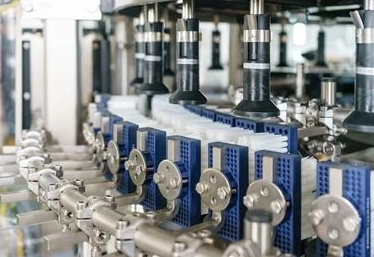
How Bottle Labeling Machines Are Transforming Modern Packaging Industries

Packaging is no longer just a final step in production. It has become a critical part of branding, compliance, product identity, and customer experience. In today’s competitive markets, companies are under constant pressure to deliver products that not only perform well but also look professional and consistent on the shelf. This is where automation in packaging has completely changed the game.
Among the most important innovations in this field is the bottle labeling machine, a highly specialized piece of equipment designed to apply labels on bottles with speed, precision, and uniformity. Whether used in beverage production, pharmaceuticals, cosmetics, or chemical industries, this machine ensures that every product carries a clean, accurate, and visually consistent label.
The role of the bottle labeling machine goes far beyond simple sticker application. It directly influences branding quality, production efficiency, and operational consistency in large-scale manufacturing environments.
The Evolution of Packaging and Labeling
In earlier manufacturing systems, labeling was done manually, which often resulted in inconsistent placement, air bubbles, misalignment, and slower production rates. As industries scaled, manual labeling became a bottleneck that limited overall efficiency.
With the rise of automation, packaging lines started integrating mechanical labeling systems that could apply labels faster and more accurately. Over time, these systems evolved into advanced machines capable of handling different bottle shapes, materials, and label types without compromising speed or quality.
Today, automated labeling systems are a standard part of modern production lines, especially in industries where visual presentation and regulatory compliance are equally important.
See also: IPTV Suppliers Canada: Ranked 2026
What a Bottle Labeling Machine Actually Does
A bottle labeling machine is designed to apply adhesive labels onto bottles in a controlled and highly precise manner. It ensures that each label is placed at the correct position, with proper alignment and consistent pressure.
Depending on the system design, the machine may handle round bottles, square bottles, or uniquely shaped containers. It can also work with different types of labeling materials, including paper, plastic, and transparent films.
The main goal of a bottle labeling machine is to eliminate human error and maintain uniformity across thousands of products in a production cycle.
Why Industries Depend on Automated Labeling Systems
One of the biggest reasons industries adopt labeling automation is consistency. In manual processes, even small variations in hand placement can lead to noticeable differences in final product appearance. These inconsistencies can affect brand perception and customer trust.
Automated systems solve this issue by ensuring every label is applied in exactly the same position and alignment, regardless of production volume.
Speed is another important factor. Modern manufacturing requires high output rates, and manual labeling cannot keep up with industrial-scale demand. Automated machines significantly increase production capacity without compromising accuracy.
Applications Across Multiple Industries
Bottle labeling machines are widely used in different industries due to their flexibility and reliability. In the beverage industry, they are essential for labeling water bottles, soft drinks, juices, and alcoholic beverages with consistent branding.
In the pharmaceutical sector, labeling accuracy is critical for compliance, dosage information, and regulatory requirements. Even minor labeling errors can lead to serious consequences, making automation essential.
Cosmetic industries also rely heavily on labeling machines to maintain premium product presentation. From skincare bottles to perfumes, visual appeal plays a major role in customer decision-making.
Chemical and industrial product manufacturers also use these machines to ensure safety instructions and product details are clearly displayed.
Improving Production Efficiency and Workflow
Automation in labeling not only improves accuracy but also enhances overall production efficiency. A bottle labeling machine can process a large number of bottles in a short time, reducing bottlenecks in the packaging line.
This allows other stages of production, such as filling and sealing, to operate more smoothly without delays. As a result, the entire workflow becomes more synchronized and efficient.
Over time, this leads to reduced operational costs and improved output consistency.
Enhancing Brand Identity Through Precision Labeling
Packaging is often the first physical interaction a customer has with a product. A poorly labeled bottle can negatively impact brand perception, even if the product itself is high quality.
Automated labeling ensures that every product leaving the production line maintains a professional and visually consistent appearance. This consistency plays a key role in building strong brand identity and customer trust.
A properly functioning bottle labeling machine helps businesses maintain a polished and reliable product image in competitive markets.
Flexibility and Modern Machine Capabilities
Modern labeling machines are designed to handle a wide variety of bottle sizes, shapes, and materials. They can be adjusted quickly to accommodate different production requirements without significant downtime.
Advanced systems may also include sensors and digital controls that detect bottle positioning and adjust labeling accordingly in real time.
This flexibility makes them suitable for industries with diverse product lines and frequent packaging changes.
Reducing Human Error and Operational Waste
Manual labeling processes often result in wasted materials due to misalignment, incorrect placement, or damaged labels. Automated systems significantly reduce this waste by applying labels with high precision.
This not only improves efficiency but also reduces overall production costs by minimizing material loss.
In addition, automation reduces dependency on manual labor, allowing workers to focus on more technical and supervisory roles within the production process.
The Future of Labeling Automation
The future of bottle labeling technology is expected to become even more advanced with the integration of artificial intelligence, machine vision, and smart sensors. These technologies will allow machines to automatically detect bottle variations and adjust labeling parameters without manual input.
This will further improve accuracy, reduce downtime, and increase adaptability in production environments.
As industries continue to move toward full automation, systems like the bottle labeling machine will become even more intelligent and essential.
Conclusion
The bottle labeling machine has become a vital component of modern packaging industries, offering unmatched precision, speed, and consistency. It has transformed labeling from a manual, error-prone process into a highly efficient automated system that supports large-scale production.
By improving accuracy, reducing waste, and enhancing brand presentation, it plays a key role in helping businesses compete in fast-moving markets.
As automation technology continues to evolve, labeling systems will become even more advanced, further strengthening their importance in global manufacturing and packaging operations.