PedSense Contactless Push Button: The Future of Smart, Touch-Free Traffic Control Systems

Urban traffic systems are rapidly evolving into smarter, safer, and more responsive infrastructures designed to improve both pedestrian experience and road efficiency. As cities grow and vehicle density increases, traditional traffic control components are being replaced with intelligent solutions that reduce physical interaction, enhance safety, and improve accessibility for all users.
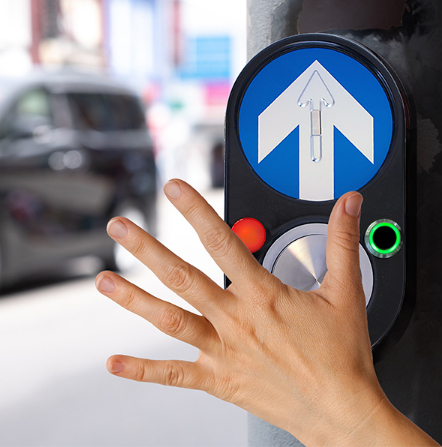
One of the most significant innovations in this transformation is the PedSense push button, a modern pedestrian activation system designed for smart intersections and advanced traffic signal networks. Instead of requiring physical contact, this system uses intelligent sensing technology that allows pedestrians to activate crossing signals through proximity-based detection.
The rise of such touch-free systems is not just a technological upgrade but a response to changing urban needs, including hygiene concerns, accessibility requirements, and the demand for more reliable traffic management tools.
What Makes Contactless Pedestrian Systems Necessary Today
Traditional push buttons have been used for decades in traffic signal systems, but they come with several limitations. Physical contact points are prone to wear, environmental damage, and hygiene concerns, especially in high-traffic public areas such as city centers, schools, and hospitals.
Modern urban planning now prioritizes safety, accessibility, and durability. As a result, contactless technology has become an essential component in infrastructure development. Pedestrian systems are expected not only to function efficiently but also to support diverse user groups, including elderly individuals, children, and people with disabilities.
This shift has led to the development of smart activation systems like the PedSense contactless push button, which eliminates the need for direct physical interaction while maintaining reliable signal activation.
See also: How Technology Shapes Career Paths
Understanding How PedSense Contactless Push Button Works
The PedSense system is built around intelligent sensor-based activation. Instead of pressing a mechanical button, pedestrians simply approach or gesture near the device, and the system detects the presence using advanced sensing technology.
This detection triggers a request to the traffic signal controller, which then processes the crossing phase accordingly. The system ensures that activation is intentional, accurate, and resistant to accidental triggers caused by environmental factors.
A key feature of the PedSense contactless push button is its multi-layer feedback system, which typically includes visual LED indicators, audio confirmation signals, and adaptive response mechanisms that confirm successful activation.
Core Features That Improve Urban Traffic Experience
Modern traffic systems require more than just basic functionality. They need to deliver clear communication between pedestrians and control systems. PedSense achieves this through a combination of smart features designed for real-world conditions.
One of the most important features is acoustic guidance, which provides audible cues during different traffic phases. This helps pedestrians understand when it is safe to cross, especially in busy or noisy environments.
Another key feature is adaptive volume control, which automatically adjusts sound levels based on surrounding noise conditions. This ensures that signals remain audible without creating unnecessary noise pollution.
The system also includes visual LED indicators that provide immediate feedback after activation, improving user confidence and reducing confusion at intersections.
Enhancing Safety and Accessibility in Public Spaces
One of the biggest advantages of contactless pedestrian systems is improved accessibility. Traditional buttons can be difficult to use for individuals with mobility challenges, visual impairments, or those carrying objects.
PedSense technology improves inclusivity by allowing activation without physical pressure or precise hand movement. The system is designed to respond within a controlled detection range, making it easier for all pedestrians to use.
In addition, the combination of audio, visual, and tactile feedback ensures that the system is usable by a wide range of individuals, aligning with modern accessibility standards in urban infrastructure planning.
Durability and Performance in Outdoor Environments
Traffic control devices must operate reliably in harsh environmental conditions such as rain, dust, temperature fluctuations, and continuous usage. The PedSense system is designed with robust housing materials that ensure long-term durability and stable performance.
Its structure supports outdoor installation in high-traffic zones, including intersections, school crossings, and smart city environments. The system maintains consistent functionality even under heavy usage conditions, making it suitable for long-term infrastructure deployment.
This durability ensures that cities can reduce maintenance frequency while maintaining high operational efficiency in their traffic systems.
Integration With Smart Traffic Infrastructure
Modern traffic systems are increasingly interconnected, forming part of larger smart city ecosystems. PedSense is designed to integrate seamlessly with existing traffic signal controllers and intelligent transportation systems.
It communicates efficiently with central control units, ensuring that pedestrian requests are processed in real time without delay. This integration helps improve traffic flow management and reduces waiting time at intersections.
The PedSense contactless push button also supports flexible configuration, allowing municipalities to adapt system behavior based on specific intersection requirements or traffic patterns.
Role in Smart City Development
As cities transition into smart urban environments, the demand for intelligent infrastructure continues to grow. Contactless pedestrian systems are becoming a key component of this transformation.
PedSense contributes to smart city development by improving data-driven traffic control, reducing physical interaction points, and enhancing overall pedestrian safety. These systems also support future-ready infrastructure planning, where automation and real-time responsiveness are essential.
By integrating such systems, cities can create safer and more efficient transportation networks that adapt dynamically to changing traffic conditions.
Future of Contactless Traffic Technology
The future of pedestrian crossing systems is expected to move toward even more advanced automation, including AI-based traffic prediction, sensor fusion technologies, and fully adaptive signal control systems.
Contactless activation will likely become a standard feature in urban infrastructure, replacing traditional mechanical systems entirely. Future versions may include gesture recognition, mobile integration, and predictive pedestrian detection.
The PedSense push button represents an important step in this direction, bridging the gap between traditional infrastructure and fully intelligent transportation systems.
Conclusion
The evolution of pedestrian crossing systems reflects the broader transformation of urban infrastructure into smarter, safer, and more connected environments. The PedSense system is a clear example of how technology can improve everyday city interactions without adding complexity for users.
By removing physical contact requirements and introducing intelligent sensing, this system enhances safety, accessibility, and operational efficiency at urban intersections.
As cities continue to modernize, contactless solutions like the PedSense contactless push button will play a critical role in shaping the future of traffic management and smart urban mobility systems.