Why Flexible PCB Manufacture Is Becoming Important for Electronics Built Around Human Movement

Electronic devices are increasingly being designed around the way people move rather than around fixed surfaces. Wearable sensors follow the shape of the body, fitness devices move with the wrist, medical monitors may need to remain attached during daily activity, and smart textiles can change position as the user walks or bends. These products create a different challenge for circuit designers because the electronics have to function within an environment that is constantly changing.
A conventional rigid circuit board can provide excellent structural support and reliable electrical connections, but its fixed shape can become restrictive when the surrounding product needs to bend or conform to a person. The problem is not simply making the circuit smaller. The circuit also needs to occupy space without interfering with movement, comfort, or the mechanical behavior of the device. This has made flexible circuitry increasingly relevant to products where electronics and human movement exist very close together.
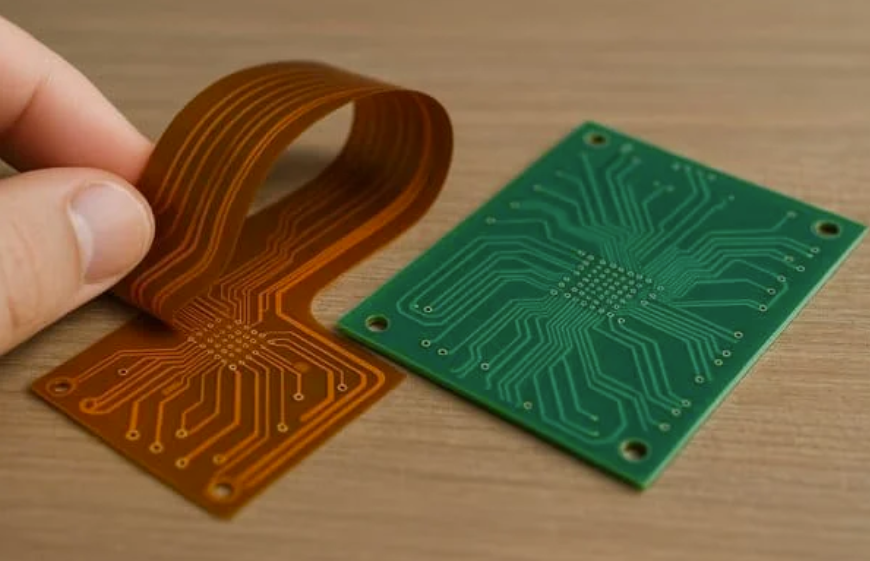
Flexible PCB manufacture therefore represents more than an alternative way of producing a circuit board. It supports a different approach to electronic architecture in which electrical pathways can be designed with the movement and shape of the final product in mind. That relationship becomes particularly important in wearable technology, health monitoring, smart clothing, rehabilitation equipment, and other devices that need to interact directly with the moving human body.
Human Movement Creates Unusual Conditions for Electronics
The human body does not provide a fixed platform. Wrists rotate, knees bend, fingers move, and skin changes shape during ordinary activities.
A wearable device attached to any of these areas experiences some of that movement. The electronics inside therefore need to coexist with physical changes that would not normally occur inside a stationary consumer product.
This creates a design challenge involving both electrical performance and mechanical behavior. The circuit must continue functioning while the product moves naturally with the user.
See also: Common Measurement and Administration Mistakes Involving Half-Dosing Mounjaro
Wearable Devices Need to Follow the Shape of the Body
Comfort is an important part of wearable design. A thick or rigid internal structure can make a device feel uncomfortable, especially when it sits against the body for long periods.
Flexible circuitry can provide designers with additional freedom when arranging internal electronics around curved surfaces. Instead of depending entirely on a flat board, certain connections can follow the available geometry more naturally.
This does not mean that every wearable needs a fully flexible circuit. The appropriate architecture depends on the device, but flexibility can become valuable when conventional board shapes create unnecessary restrictions.
Movement Changes the Mechanical Requirements
A circuit that remains stationary inside a desktop device experiences very different conditions from one installed inside a wearable product.
Repeated motion can place stress on connection points and conductive layers. The frequency and direction of movement also matter. A circuit that bends gently in one location may have very different reliability requirements from one that experiences repeated folding.
Engineers therefore need to understand the expected movement before determining how flexible circuitry should be incorporated.
Smartwatches Show the Relationship Clearly
Smartwatches combine sensors, displays, processors, batteries, wireless communication, and other electronics inside a relatively small enclosure that is constantly moving with the user’s wrist.
The internal arrangement has to account for the limited space available while also supporting a product that is worn throughout the day.
Flexible connections can provide useful routing options between components positioned around the enclosure. They can also help designers work with curved or irregular internal spaces without requiring every electronic element to sit on one large rigid surface.
Health Monitoring Adds Another Dimension
Health and fitness devices can depend on continuous contact with the user. Sensors may need to remain positioned correctly while the person walks, exercises, sleeps, or performs everyday activities.
This makes physical stability and flexibility important considerations. A circuit architecture that works well on a laboratory bench may not necessarily be suitable for a device that moves with the body for hours at a time.
Flexible electronics can help support these designs by allowing certain electrical connections to accommodate movement while keeping the overall device compact.
Smart Clothing Takes Flexibility Further
Wearable technology does not have to remain inside a watch or wristband. Electronics can also be integrated into clothing and other fabric-based products.
Smart garments may contain sensors, communication components, lighting elements, or monitoring systems distributed across different areas of the fabric.
This creates a particularly strong requirement for adaptable electrical connections. The electronics need to coexist with folding, stretching, and ordinary garment movement without making the clothing excessively rigid or uncomfortable.
Repeated Flexing Requires Careful Engineering
Flexibility should never be confused with unlimited bending.
A flexible circuit still has a defined mechanical tolerance. Bend radius, trace geometry, material selection, layer construction, and component placement all influence how the circuit responds to movement.
If a circuit is repeatedly bent beyond its intended limits, mechanical stress can eventually affect its conductive pathways or connections.
For wearable applications, understanding the difference between occasional bending and continuous flexing is therefore essential.
The Position of Components Can Affect Reliability
Components placed directly within areas that experience repeated movement can create additional mechanical challenges.
Designers may instead position sensitive components in relatively stable regions and use flexible sections to connect them to areas that need to move.
This approach allows the circuit to divide the product into different mechanical zones. Stable areas can provide support for components, while flexible pathways handle movement between those areas.
Sensors Benefit From Physical Integration
Many modern wearable products depend on sensors that need to remain close to the body or another physical surface.
Examples include motion sensors, temperature sensors, pressure sensors, and other monitoring components.
The physical location of these sensors can be just as important as their electrical connection. Flexible circuit architecture can provide additional freedom when routing connections to sensors positioned away from the main processing electronics.
Flexible Circuits Can Reduce Unnecessary Wiring
Traditional wiring can provide flexibility, but it also introduces separate cables, connectors, and routing requirements.
In a compact wearable product, these additional components can consume valuable internal space.
A flexible circuit can combine conductive pathways into a structured layer, potentially reducing the need for separate wiring in certain designs. This can help create a more organized internal architecture while maintaining the electrical connections required between different components.
Comfort and Electronics Have to Work Together
A wearable product can function perfectly from an electrical perspective and still fail as a product if it is uncomfortable.
Thickness, stiffness, weight, heat, and surface shape all influence how a device feels when worn.
Flexible circuit technology can contribute to reducing some physical constraints, but it is only one part of the design. Battery placement, enclosure construction, component size, and thermal behavior remain equally important.
The strongest designs treat electronics and ergonomics as connected problems rather than separate stages.
Manufacturing Has to Account for Movement
Producing a flexible circuit requires attention to both electrical and mechanical requirements.
Trace patterns, material layers, connection areas, component attachment, and protective structures all need to be considered according to how the finished circuit will move.
This makes manufacturing quality particularly important for products expected to experience repeated mechanical stress. A circuit that performs correctly when stationary still needs to maintain that performance under its intended operating conditions.
Flexible PCB Manufacture Supports More Adaptable Product Architectures
The manufacturing process ultimately enables designers to turn flexible circuit concepts into practical components.
Flexible PCB manufacture involves more than selecting a flexible substrate. The final result depends on how materials, conductive layers, components, and protective structures are combined for the intended application.
For products that interact with human movement, this relationship between manufacturing and mechanical requirements becomes especially important. The circuit needs to behave predictably throughout the product’s expected life.
Wearable Robotics Could Expand the Role of Flexible Circuits
The boundary between wearable electronics and robotics is becoming increasingly interesting.
Devices designed to assist movement, monitor physical activity, or interact with the body may contain electronics distributed across joints or moving sections.
These systems can require electrical connections that remain functional while different parts of the device move relative to one another. Flexible circuits can provide one possible solution for connecting those areas while accommodating controlled movement.
Future Devices May Become Less Rigid Internally
As wearable technology develops, designers may have more opportunities to distribute electronics throughout a product instead of concentrating everything on one rigid board.
This could support thinner devices, more comfortable wearables, flexible sensor arrangements, and products designed around specific body movements.
The challenge will remain finding the right balance between flexibility, durability, electrical performance, manufacturing complexity, and cost.
The Main Value Is Adaptability
Flexible circuitry does not automatically make an electronic product better. Its value becomes clearer when the product itself has physical requirements that benefit from adaptable electrical connections.
For stationary devices, rigid boards may remain the most practical choice. For products that bend, move, curve, or interact directly with the human body, flexible construction can offer design possibilities that are difficult to achieve with rigid architecture alone.
Final Thoughts
Human movement creates a unique environment for electronic devices. Unlike conventional equipment that remains in one position, wearables and body-connected technologies have to function while their physical surroundings constantly change. This makes mechanical adaptability an important part of electronic design rather than an optional feature.
Flexible circuitry provides designers with another way to approach that challenge. It can help connect distributed components, follow curved structures, accommodate controlled movement, and reduce some of the space restrictions created by traditional rigid boards. Its effectiveness still depends on careful material selection, appropriate bend requirements, reliable connections, and application-specific engineering.
As wearable technology moves toward smaller and more integrated designs, the connection between the human body and electronic architecture will become increasingly important. Flexible PCB manufacture supports that shift by making it possible to approach circuitry as something that can adapt to movement rather than simply remain fixed inside a device.